After a hearing evaluation, you’ll leave with a copy of your audiogram results, but you might not be entirely sure what you’re looking at. The chart is filled with numbers, letters, and symbols that can seem overwhelming if you’ve never seen one before.
But you don’t need to know how to read an audiogram like a hearing professional to understand what it’s saying about your hearing. You just need to know some terms and how to read a few symbols to make your hearing test results much easier to interpret.
What Is an Audiogram?
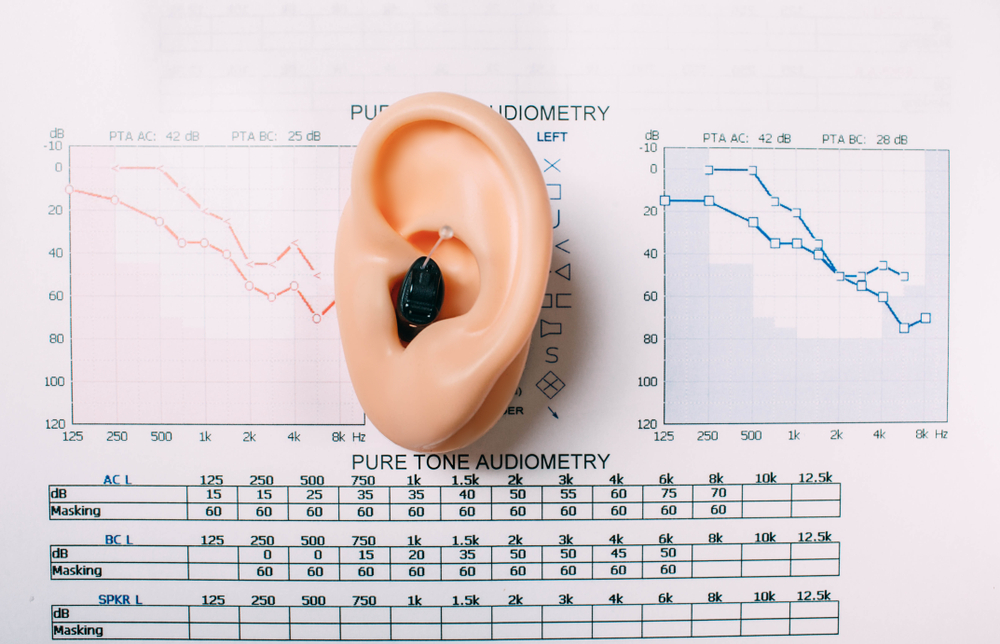
An audiogram is a graph that shows how well you hear sounds across different pitches and volumes. It’s one of the primary tools hearing care providers use to evaluate your hearing, monitor changes over time, and diagnose hearing loss.
Each time you respond to a sound, the results are recorded on the audiogram, which displays the faintest sound that you are able to hear at each pitch. The finished chart provides a visual representation of your hearing across a range of sounds, helping your audiologist determine whether you have hearing loss and how severe it might be.
An audiogram is part of a full hearing evaluation and provides important information. During your first appointment, we’ll review the results with you, and your audiologist will consider not only the results but also your symptoms and communication struggles to get a more complete picture of your hearing health.
How to Read an Audiogram
At first glance, an audiogram may seem complicated, but it’s really just a graph that measures two things, the pitch of a sound and how loud it must be before you can hear it. Once you understand what it’s measuring, reading an audiogram becomes much less intimidating.
What The Horizontal Axis Measures
The numbers along the top axis of the graph indicate frequency, which is measured in hertz (Hz). Frequency refers to the pitch of a sound, and the range moves from lower-pitched sounds on the left to higher-pitched sounds on the right.
Lower frequencies include sounds like thunder or drums. Higher frequencies include birds chirping, children’s voices, and certain letter sounds like “s,” “f,” and “th.”
Those higher-pitched consonants play an important role in how you understand speech. When your hearing gets damaged enough, it affects how you hear these frequencies. This is why you might hear someone talking but can’t make out what they are saying.
What The Vertical Axis Measures
The numbers running down the side of the chart measure decibels (dB HL), or how loud a sound needs to be for you to hear it. While most graphs are read from left to right, an audiogram is read from top to bottom, and the lower your results are on the graph, the louder a sound has to be for you to hear it.
For example, a whisper is much quieter than someone speaking at a normal volume, while a vacuum cleaner or lawnmower is much louder. The points on this axis of your audiogram show the softest sounds you can hear at each pitch.
What Do the Symbols Mean?
You’ll see two symbols on your audiogram:
- O represents your right ear.
- X represents your left ear.
Your provider may also perform two types of testing:
- Air conduction testing measures how sound travels through your entire hearing system using headphones or earbuds.
- Bone conduction testing sends sound directly to the inner ear through a small device placed behind the ear.
Using the results from these tests in conjunction with your audiogram can help determine if your hearing loss is coming from your outer ear, middle ear, inner ear, or a combination of these areas. All of these tests help our hearing specialists determine the type of hearing loss you have and the best way to treat it.
What Your Audiogram Can Tell You
An audiogram offers two key pieces of information, how much hearing loss you have and what type you’re experiencing. But what do the levels of hearing loss mean? Hearing loss is generally grouped into five categories, from mild hearing loss to profound, based on the quietest sounds you can hear.
H3: Hearing Loss Severity
| Normal | Most speech and everyday sounds are heard comfortably. |
| Mild | Softer speech and certain consonants may become harder to hear, especially in background noise. |
| Moderate | Conversations often require more concentration, and television or phone calls may become more difficult. |
| Severe | Normal conversation is difficult to hear without amplification. |
| Profound | Only very loud sounds may be heard naturally, and communication often relies on hearing technology or other strategies. |
While these categories show what the different levels of hearing loss can look like, they don’t capture the reality of how much it affects your daily life. Two people with similar audiogram results may have very different experiences with hearing loss.
What Type of Hearing Loss Do I Have?
Sensorineural hearing loss is the most prevalent type of hearing impairment and it is usually brought on by aging, excessive noise exposure, genetics, or certain medical conditions. Although it’s typically permanent, it can be managed with hearing aids.
Conductive hearing loss happens when sound has difficulty traveling through the outer or middle ear due to things like earwax buildup, fluid behind the eardrum, or ear infections. Depending on the root cause, this type of hearing loss can be temporary and may be treatable with medication.
The third type is mixed hearing loss, which is a combination of both sensorineural and conductive hearing loss. Because it involves multiple parts of the hearing system, treating this type may require both medical care and hearing aids, depending on what the underlying cause is.
What Your Audiogram Doesn’t Show
Learning how to read an audiogram is important, but the chart doesn’t tell the whole story. While it measures the quietest sounds you can hear, it doesn’t fully capture how well you can understand speech in everyday situations. This means that your audiologist has to look beyond your audiogram results. They’ll ask about the situations where you’re having the most difficulty and may perform speech understanding tests to build a more complete picture of your hearing.
For most people, the problem isn’t just whether you can hear sounds. The bigger issue is usually the inability to distinguish speech from background noise or to process conversations when multiple people are speaking.
For instance, you might not have any trouble having a one-on-one conversation in a quiet room but find it difficult to follow conversations in a louder place, like a restaurant, or when multiple people are talking at once. Louder or more crowded listening environments make you work harder to hear certain sounds and affect your brain’s ability to process speech.
What Happens After Your Hearing Test?
Once you’re done with testing, your audiologist will interpret your results and decide what it means for the future of your hearing health. They will explain any patterns they see on your audiogram, answer your questions, and walk you through their recommendations that will help you meet your hearing needs.
Do I Need Hearing Aids?
One of the most common questions asked during a hearing evaluation is whether needing an audiogram automatically means you need hearing aids. But it doesn’t really work like that. An audiogram helps determine whether hearing aids are likely to improve your hearing, but there isn’t a score that automatically means you’ll need them.
Also, not everyone with hearing loss needs hearing aids right away. There might be different recommendations depending on your results. You might get recommended hearing aids, continued monitoring, or another evaluation to better determine the right path for you.
Other Possible Recommendations
Depending on the outcome of your hearing evaluation, it may be recommended that you take some of the following steps to protect your hearing or get more answers:
- Wear hearing protection for work or recreational noise
- Use communication strategies if you’re in a difficult listening environment
- Get a medical evaluation to assess symptoms or rule out underlying conditions
- Schedule repeat hearing assessments to monitor your hearing for any changes
When Should You Have Another Hearing Test?
Any decrease in your hearing usually happens gradually, which can make any small changes difficult to spot, especially if it’s been a while since your last evaluation. Regular hearing screenings make it possible to identify these changes early and provide you with updated treatment recommendations as your hearing changes.
Adults should have their hearing tested annually, especially if you’re over 60. You might need screenings more often if you already use hearing aids, have tinnitus, are frequently exposed to loud noises, or have noticed a change in your hearing since the last visit.
If you’ve noticed habits like asking people to repeat themselves more often, turning up the television volume, or avoiding conversations because they’re becoming difficult to follow, you should schedule another hearing evaluation rather than waiting for your next routine visit so you can address these changes.
Stay Informed On Your Hearing With Our Hearing Evaluations
Understanding your hearing is an ongoing process, not just a one-time thing. An audiogram is an important tool, but it’s even more valuable when you know what the results mean with regards to what it means as far as your hearing in the long run.
Being able to comprehend your hearing test results means being able to read your audiogram, or at least know how the chart works and what it measures so that you are able to interpret the data properly and have an informed idea of what it means for your hearing.
Whether you’re trying to figure out how to read a recent audiogram or it’s time for another hearing evaluation, Beltone Skoric is here to provide support and help you reach your hearing goals. If it’s been a while since your last hearing test or you have questions about your results, schedule a comprehensive hearing evaluation with Beltone Skoric. We’ll help you better understand your hearing and what comes next.