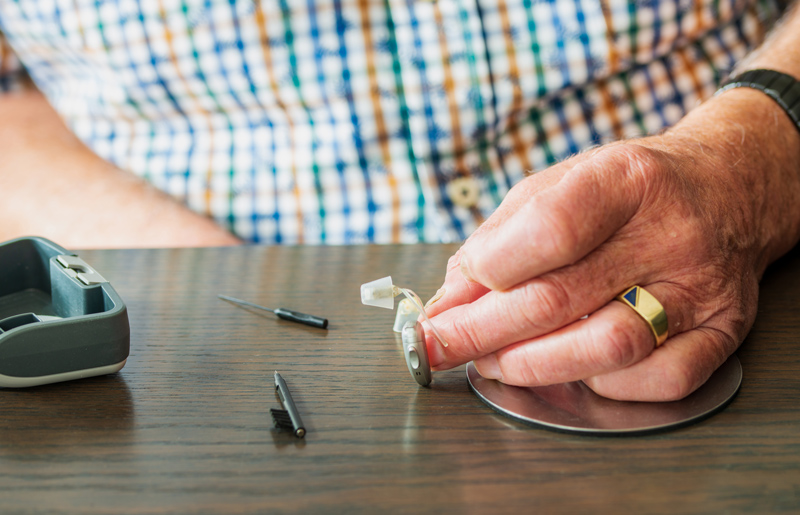
Hearing aids can make a huge difference in the way you live your day-to-day life. Learn more about why its important to care for your hearing aids.
Hearing aids can make a world of difference in your quality of life. You want to do everything possible to maintain your hearing aids so that you can continue to enjoy life on your own terms. Proper maintenance should include a daily cleaning routine and regular visits to your audiologists for professional cleaning.
Daily Cleaning Practices
While your hearing aids can be great for enhancing your ability to interact with the world around you, they have very delicate inner circuitry that must be protected from damage. It’s imperative that you take some time each day to properly clean your hearing aids to remove any unwanted debris and moisture.
It’s best to have a soft, dry cloth to wipe down each hearing aid at the end of the day. If you have removable ear molds, you should take them off and wash them thoroughly with a mild soapy solution. Make sure that they’re thoroughly dried before reinstalling them.
Throughout the daytime, it’s not uncommon for your hearing aids to be exposed to moisture. Whether you walked in the rain or were sweating during a workout, moisture can seep into the inner workings of your hearing aids. It’s a good idea to open the battery door overnight to let that moisture dissipate. When you take out your hearing aids, make sure that you store them in a cool and dry place.
Dealing With Excess Moisture
If you live in a humid climate, like near the ocean, it can wreak havoc on the lifespan of your hearing aids. One of the best things you can do to combat this issue is to invest in a hearing aid dehumidifier. Simply leave your hearing aids overnight in your dehumidifier case to help get rid of unnecessary moisture.
Prevention is always the best method for maintaining the integrity of your hearing aids. If you know that it’s going to be raining, make sure that you wear a hat that completely covers your ears so that no water can physically enter your hearing aids. Additionally, if you’re working out, consider taking your hearing aids out so that your sweat doesn’t drip into them.
Professional Cleaning
Apart from daily cleaning, you’ll want to schedule professional cleaning sessions with your local hearing aid center. Think of professional cleaning as deep cleaning for your hearing aids. Your specialist will have the appropriate tools to adequately clean the interior components of your hearing aids.
It’s recommended to get professional cleanings every six months to enhance the lifespan of your hearing aids. After the cleaning, it’s a good idea to have your specialist adjust your hearing aid settings to meet your current hearing needs.
Call Us Today
If it’s time to get your hearing aids professionally cleaned, then contact us at Beltone Skoric Hearing Aid Center. We’ll be more than happy to assist you with all of your hearing-related needs.
Resources:
https://www.washingtonent.net/audiology-services/blog/when-your-hearing-aids-need-professional-cleaning