Having your hearing tested every couple of years is essential to your health. Therefore, it is not a good idea to fake your hearing test. Learn more!
Regular hearing tests are a great way to help detect any problems that may develop with your hearing. They can also be very helpful for detecting other underlying diseases that you may not currently know about. When you sit down to take your hearing test, it’s imperative that you do so in an honest manner.
Temptations of Faking a Hearing Test
There are many reasons one may consider faking a hearing test. One of the top reasons is to cash in on compensation for injury claims. Maybe others at your place of work have experienced hearing loss, and it may seem like a quick way to get paid disability not to work. In other cases, maybe you’re just trying to pass your hearing test to avoid having to wear hearing aids. No matter what the reason, faking a hearing test is not something that you should take lightly.
Attempting to Fake a Hearing Test
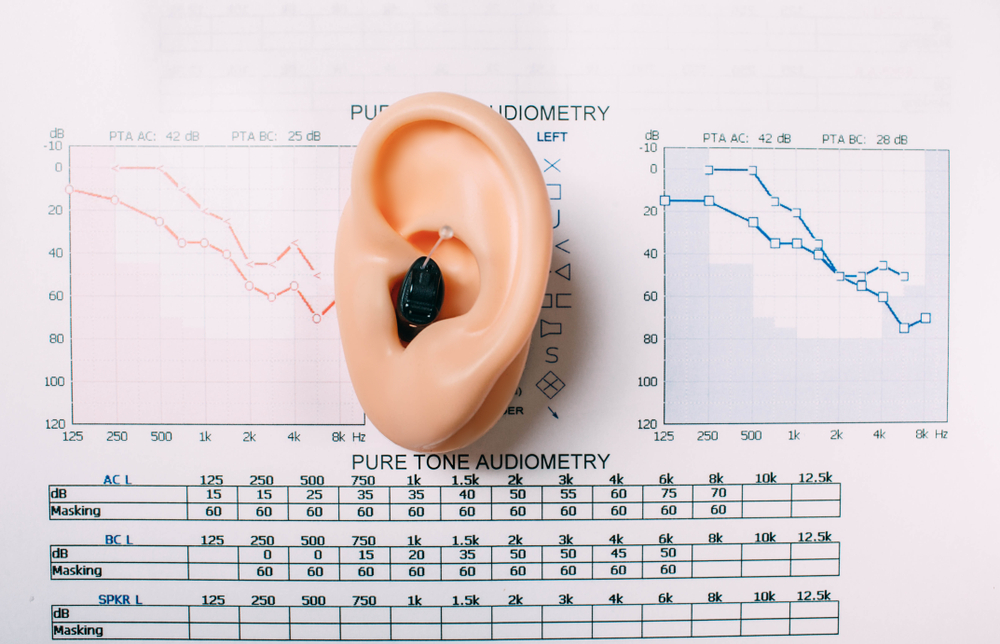
At first glance, it may seem very easy to fake a hearing examination. Most people are familiar with the examination where you must raise a hand or push a button to indicate what ear you hear a sound in. You may think of skipping a few hand raises or button pushes.
It’s vital to realize that hearing tests are set up in a fashion where the audiologist will play different volumes of the beeps. If you want to convince the audiologist that you have hearing loss, you’ll need to be consistent with ignoring all the same tones in the same ear.
This may lead you to decide to fake hearing loss in one ear for all the different tones. That’s not a good idea. The Stenger test is specifically designed to detect unilateral hearing loss and can’t be beaten. The audiologist will know right away that you were faking unilateral hearing loss.
Early Detection of Medical Problems
While hearing tests are an excellent tool for identifying the type of hearing loss a person has, they are also ideal for the early detection of some medical problems. When hearing loss is a symptom of an underlying condition, it can give you early insight into what that condition is and allow your doctor to work towards fighting it. Some underlying conditions that may be detected early with a hearing test include heart disease, Meniere’s disease, Paget’s disease, Pendred syndrome, high blood pressure, and rheumatoid arthritis.
Call Us Today
If you believe a professional hearing test can benefit you, contact us at Beltone Skoric Hearing Aid Center. Our helpful hearing care specialists will be more than happy to perform a hearing examination and present their findings to you.